 By Thomas Cohen, founder of Maestro
Behind the Journal: two months of articles, corrections, and what comes next
Two articles a day since September 3, one in the morning and one in the evening. Here is the story behind the Journal: how an article is made, what we do not measure, the four flaws in our application we have discussed here, and the professions coming in November.
Here is the story behind Maestro's Journal, two months after it moved to two articles a day: 55 articles in September and 62 in October, according to our own editorial calendar. Mornings cover lasting subjects (a profession, a comparison, a price, a method); evenings cover news, behind-the-scenes work, and difficulties readers have reported.
What we do not know
We measure website traffic through aggregate statistics, without tracking individuals across websites. Search Console also reports impressions and clicks in Google. These data alone do not explain why someone reads an article or what they do with it afterward. This review covers what we have published and corrected; it does not rank articles by readership or present traffic figures we have not collected.
How an article is made
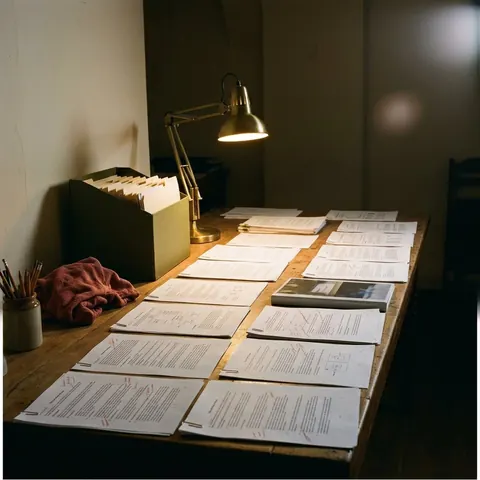
Every article starts with a dated research file, in which each page has been read that day and each price checked against its official source. One rule holds everything else together: no number without its source named in the sentence. Anything marked “to be reconfirmed” or “unverified” in the file is not published, even when the number is circulating everywhere else. Two examples of things we left out: median French agency prices we had quoted in August and stopped using because their pages returned an error when we checked again; and a well-known freelance rate survey, rejected because its figures did not come from any page we could consult. When the source is missing, the number goes and the qualitative observation stays. The constraint costs hours and makes the articles less spectacular than others; it also prevented us from publishing two amounts that turned out to be false when checked.
The main themes
Professions came first: around thirty guides, from dental practices to volunteer condominium management, including garages, florists, repair workshops, estate agencies, and small-town councils. Each starts with the profession's actual rules, not a template copied from one guide to another. Comparisons came next, all checked at the source on the same day: Lovable, Bolt, Replit, Base44, Emergent, Manus, Bubble, FlutterFlow, Softr, Glide, Cursor, and Codex. Then pricing, with ten agency quotes and freelance day rates, and the quote itself, broken down into seven items this very morning. Finally, regulation, driven by the European calendar: the Cyber Resilience Act, AI Act, electronic invoicing, and CNIL publications.
The four flaws we wrote about
A software publisher's journal that only publishes successes is worthless. Four flaws in our application have had an article here. The token counter displayed the wrong amount because it left out part of the consumption, and it was rebuilt to count accurately; the subject returned on the day model memory reads changed price. The notification bell was too loud after an update, announcing everything that already existed as new: it now presents only one approval at a time. A tester sent us their project because their online database would not connect; when we opened it, we saw their access key written in plain text inside their application, with our tool unable to warn them: the full postmortem is published. A tester had installed an AI assistant without ever signing in, and the refusal message was being treated as a valid response: version 0.1.17 fixed it. Each time, the same sequence: a tester notices, a version ships that day, and an article tells the story a few weeks later, once the fix is in use by everyone.
What is coming in November
Nine professions are waiting for their guide: notaries, pharmacies, testing laboratories, independent private schools, IT service companies, printers, removals firms, concierge services, and landscapers. Comparisons will continue, both for tools we have not yet checked at the source and for those whose prices have changed by then, since four platforms were renamed or sold over the summer. Behind-the-scenes articles will follow the release schedule, with what error reporting shows us and what it will never see.
Where to start with two months of articles
Choose according to your situation rather than the date. If you want a rough budget before talking to a provider, start with the morning pricing articles. If you already have aging software, start with the modernization articles. If your profession is on the list, its guide will tell you in ten minutes whether your situation merits a tool of your own. And if your profession is missing, write and tell us.
Read the complete guide: build an application without coding